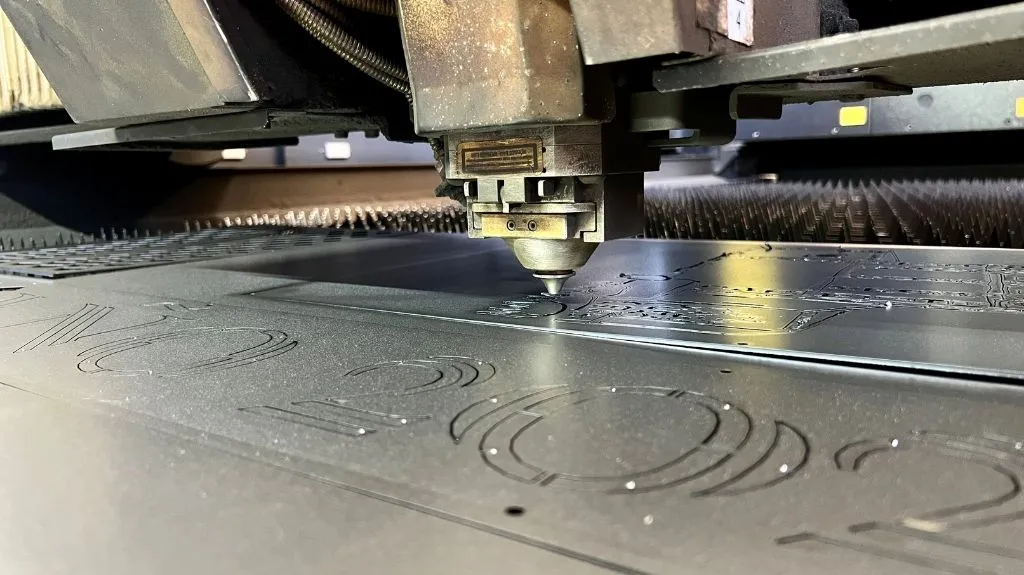
There are a lot of different processes used in custom metal fabrication to provide you with a quality end product. The processes used may depend on the materials you are using or the precision needed for your project, and having a better understanding of those processes will help inform decisions about the design used for your project. When you plan your custom metal fabrication project, it is important to understand the differences between laser cutting, plasma cutting, and waterjet cutting — and this overview will help answer your questions.
Laser Cutting vs. Plasma Cutting vs. Waterjet Cutting
Maybe the first step in the metal fabrication process — cutting will set the standard for your metal fabrication project and the process used in this three-way comparison will have an impact. Choosing the wrong cutting process can lead to warped materials, jagged cuts, and higher costs. To help ensure your project starts on the right foot, this comparison will take a closer look at how laser, plasma, and waterjet cutting each work and how they measure up against each other in precision, speed, and cost.
Here is a closer look at the pros and cons of each metal cutting process:
Laser Cutting
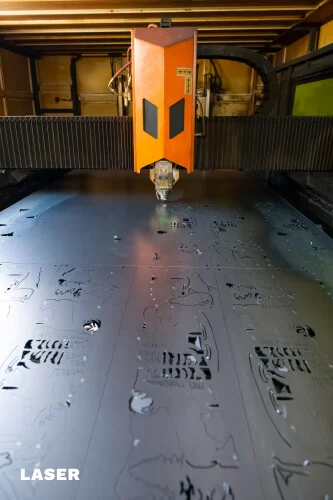
Laser cutting is a precision cutting technique that uses a high-powered and focused fiber or CO2 laser to melt or burn metal material, and then a compressed gas stream eliminates the excess, molten material to create a crisp, clean edge on the cut.
- Precision: Laser cutting provides the highest degree of precision in metal fabrication with tolerances that can be as tight as 0.005 inches. With a very narrow cut width (kerf), laser cutting allows for very crisp details and sharp cuts.
- Speed: Is your metal fabrication project on a short timeline? Laser cutting can be very fast with sheet metals that are less than ¼-inch thick — but the production time increases based on the thickness of the material.
- Cost: Laser cutting machines can be expensive to purchase and maintain, which translates to higher costs for customers in many cases — but the rapid turnaround time means the per-part cost can be low with high-volume production.
Plasma Cutting
Plasma cutting employs a highly-focused jet of hot plasma — or ionized gas — to burn through metal materials that are electrically conductive like mild steel, stainless steel, aluminum, copper, brass, titanium, and more. This is a thermal cutting process that is used for speed and thickness.
- Precision: The plasma cutting process is used primarily to cut thicker materials, and the nature of the process makes it less precise with a wider kerf that creates beveled edges. A Heat-Affected Zone left near the cut also means that many projects require additional cleanup. Plasma cutting has typical tolerances that range from 0.020 inches to 0.030 inches.
- Speed: When you have materials like carbon steel or stainless steel that are more than 2 inches thick that need to be cut, plasma cutting provides very fast production speeds — faster than laser and waterjet methods.
- Cost: The production costs tied to plasma cutting are the lowest in this three-way custom metal fabrication comparison, and if your project involves thick materials where the cuts do not need to be exceptionally precise, this may be the right option for you.
Waterjet Cutting
Waterjet cutting is a process in metal fabrication that uses an ultra-high-pressure stream of water that can be as high as 90,000 PSI and is combined with abrasive garnet minerals to rapidly erode material. The cooler temperatures of the waterjet make this process ideal for metals that cannot handle high heat.
- Precision: Waterjet cutting possesses a high degree of precision with tolerances as tight as 0.010 inches or better. The cold-cutting process produces zero heat-affected zones with no warping, hardening, or distortion.
- Speed: Because it uses erosion to cut material rather than extreme heat, waterjet cutting is a significantly slower process than laser or plasma cutting.
- Cost: There are a lot of cost factors that are tied to waterjet cutting that make it a more expensive process. Waterjet cutting uses a large amount of abrasive garnet mineral material, a high volume of water, and quickly wears on the high-pressure water pumps that translate to higher costs.
READ MORE: Differences Between Steel and Stainless Steel Metal Fabrication
Do you want to learn more about the cutting processes used in metal fabrication? You may be asking — what are the differences between laser cutting, plasma cutting, and waterjet cutting? Find out with this quick overview of each process to decide the best method for your metal fabrication project.
